
Official City Release
Time travel: How Bankhead Highway helped build Texas transportation
Mentioned Entities
Analysis
Overview
The Bankhead Highway, begun in 1916 as one of the nation's first transcontinental all-weather highways, crossed approximately 850 miles of Texas and left a lasting imprint on communities from Texarkana to El Paso.
Transportation
Historic Preservation
Insights by Role
Journalist
LowLow significance — routine or procedural itemThe article identifies surviving roadside structures from the Bankhead era in at least four Texas counties but does not report their current preservation status or ownership. A records and fieldwork angle exists: which structures along the Texas segment carry official historic designations, and which are at risk of demolition without any protective designation?
Resident
LowLow significance — routine or procedural itemFort Worth and Arlington residents on Camp Bowie Boulevard, Division Street, or near Walsh Ranch live on or adjacent to segments of the original Bankhead Highway route. The historic marker at Center and Division streets in Arlington is a publicly accessible site tied to this corridor's documented history.
Source Text
Open source →
Once known as the Broadway of America, the Bankhead Highway has had an impact on hundreds of Texas communities – including Fort Worth – that remains evident today.
The Bankhead Highway, begun in 1916, was one of the nation’s earliest transcontinental highways. (The Lincoln Highway, the first transcontinental route in the North, was not a reliable route in wintertime.)
The roadway extended from Washington, D.C., to San Diego, California, by way of Alabama, home of U.S. Sen. John H. Bankhead, a major supporter of the highway. Its path crossed approximately 850 miles of Texas, passing through Texarkana, Dallas, Fort Worth, Abilene, Midland and El Paso, among other communities, and roughly followed what became U.S. 67 and U.S. 80.
In Tarrant County, the route entered from Dallas County along Division Street, where a key stretch of 5.84 miles was constructed to eliminate railroad crossings. Approaching Fort Worth, the highway was rerouted to run along Camp Bowie Boulevard, which was paved with brick to accommodate increased traffic. The route slogged westward through what residents today know as Walsh Ranch and into Parker County.
A historic marker at Center and Division streets in Arlington commemorates the route through Tarrant County.
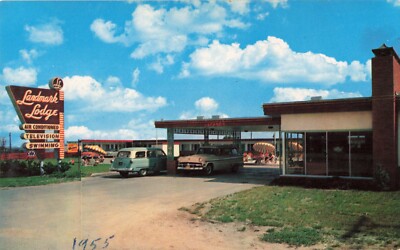
Photo:The Bankhead gave prominence to so-called tourist courts, like the Landmark Lodge in west Fort Worth, as families curated vacations around cross-country automobile trips. The Landmark Lodge is shown in its heyday in this 1955 postcard.
Driving for the fun of it
The Bankhead was the first all-weather transcontinental highway in the United States and was designated State Highway 1 in 1917 by the Texas Highway Department.
The roadway also hit the gas on a new industry — highway tourism — and entered popular culture through stories and music. Once the modern highway was completed, businesses and attractions catering to motorists emerged. While some of the structures continue to be used in their original capacity, others have been repurposed, abandoned and even demolished. The survivors represent a rich legacy in the history of the state and highway transportation.
In smaller towns, the Bankhead often traveled Main Street business districts. Communities such as Mount Vernon in Franklin County, Ranger and Eastland in Eastland County and Big Spring in Howard County hosted the historic highway, and they retain nostalgic collections of auto-related businesses dating to the mid-1900s.
One aspect of its history has remained constant since its creation: The highway has been one of the most important transportation corridors in Texas history, and it continues to play a vital role in its economy and development.
Resources
Read a comprehensive Bankhead Highway history.
View narrated videos of notable sites along the road, listen to the Bankhead Highway song called “Road Trip” or check out Texas historic sites from border to border.
Explore the Bankhead Highway in Google Earth.

Photo: The official Bankhead Highway historic route sign.
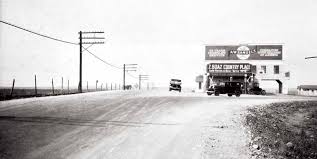
Photo: The view looking east along Weatherford Road/Bankhead Highway in Tarrant County. (TxDOT Photo Library).
Get articles like this in your inbox. Subscribe to City News.
The text and media above are reproduced from the original source for purposes of government transparency and public information under fair use. All content remains the intellectual property of its respective authors and publishers. This reproduction does not imply endorsement by or affiliation with the original publisher. For the authoritative version, please refer to the original source.
Municue is in beta
Tell us what would make press release pages more useful for your workflow.