
Official City Release
Historic park, on bluff of Trinity, celebrates Fort Worth’s founding
Analysis
Overview
Heritage Park in downtown Fort Worth, partially closed since 2007, is advancing toward a $55 million restoration anchored by a new ADA-compliant canopy walk funded in part by an $8 million regional transportation grant authorized in March 2026.
Historic Preservation
Financial Highlights
Infrastructure & Facilities
Insights by Role
Contractor
MediumMedium significance — notable action worth trackingMIG holds the design contract for the streetscape, Paddock Park, and the Heritage Park remainder, awarded through a competitive RFP. The $8 million ADA canopy walk structure is authorized but has not been tied to a named contractor, indicating a construction procurement process is likely forthcoming.
Journalist
MediumMedium significance — notable action worth trackingThe $55 million project relies partly on private foundations that are not named in the article, leaving the current funding gap unquantified. The La Corte barrio remains within the park boundary represent a cultural heritage dimension that the restoration narrative largely sets aside.
Resident
LowLow significance — routine or procedural itemFort Worth residents and visitors stand to regain a restored downtown park on the Trinity River bluff, including ADA-accessible routes via the canopy walk and reactivated water features that have been off since 2007. The article does not specify a projected reopening or phased completion schedule.
Source Text
Open source →
The bluff north of the Tarrant County Courthouse has played a pivotal role in the founding of Fort Worth. The area is the historic location of the military outpost from which Fort Worth was established.
By the turn of the 20th century, community leaders recognized the importance of preserving this site. However, progress towards developing the bluff, would not occur until the nation’s Bicentennial.
A coalition of private and public partners joined to create Heritage Park, which spans both sides of the Trinity River near the confluence of the West Fork and Clear Fork. The park was envisioned as a place to reflect on Fort Worth’s origins while offering a unique space along the river.
Heritage Park is also home to the remains of the La Corte barrio structures, reflecting an early residential community that once existed near the Trinity River.
Today, the City and the community have once again partnered to restore the historically designated Heritage Park Plaza and elevate the connections between downtown and the Trinity River at both Heritage and Paddock parks.
Celebrating America’s 200th birthday
In January 1976, as part of the Bicentennial celebration, Heritage Park Plaza was contemplated by nationally renowned landscape architect Laurence Halprin. Early improvements in Heritage Park included a bike and pedestrian bridge connecting both sides of the river. The park’s centerpiece, Heritage Park Plaza, was designed to create a series of outdoor rooms connected by water features and leading the visitor to panoramic views from the bluff of the river. Construction began in November 1977.
Some historians note Halprin’s design for Heritage Plaza was a precursor to his later work on the Franklin Delano Roosevelt Memorial in Washington, D.C., which similarly uses a series of spaces to guide the visitor’s experience.
Today: A park with promise
While Heritage Plaza is located along a busy street, its inward-facing design and maintenance needs limited public use. The water features at Heritage Plaza were turned off and the plaza was fenced in 2007.
While other areas of Heritage Park, including trail connections, have remained accessible, preservation organizations raised concern the park was in danger of demolition or heavy alteration, and in 2010, Heritage Plaza was added to the National Register of Historic Places. A larger community vision for the park and the plaza evolved from this conversation.
A new vision for Heritage
Since then, efforts have been underway to restore and reopen Heritage Park as an important public space. With funding from private foundations, partners and the City, Downtown Fort Worth Initiatives Inc. (DFWII) has helped to lead the community conversation and design efforts, in addition to fundraising, for the parks. The project is currently estimated at $55 million, which includes soft costs and a $10 million maintenance endowment.
The Heritage Park Plaza design is led by Bennett Partners (architecture) and Studio Outside (landscape architecture). Their work led to a larger design effort for the area. MIG, a planning and design firm, was selected through a competitive request for proposal process to provide design services for the streetscape, Paddock Park and the remainder of Heritage Park.
In March, the project got a major boost with the authorization of $8 million by the North Texas Council of Governments Regional Transportation Council (RTC), for an ADA-compliant canopy walk structure that would transcend the bluff. The City of Fort Worth is providing $2 million in matching funds.
As planning advances, Heritage and Paddock Parks are positioned once again to become a meaningful destination honoring Fort Worth’s history while creating new opportunities for connection and community in downtown along the Trinity River.

Photo: The park’s design focuses on visitors’ procession through several outdoor rooms.

Photo: Heritage Park marks the spot where Camp Worth was established on June 6, 1849, by Major Ripley A. Arnold on the Trinity River as a frontier outpost to protect settlers.
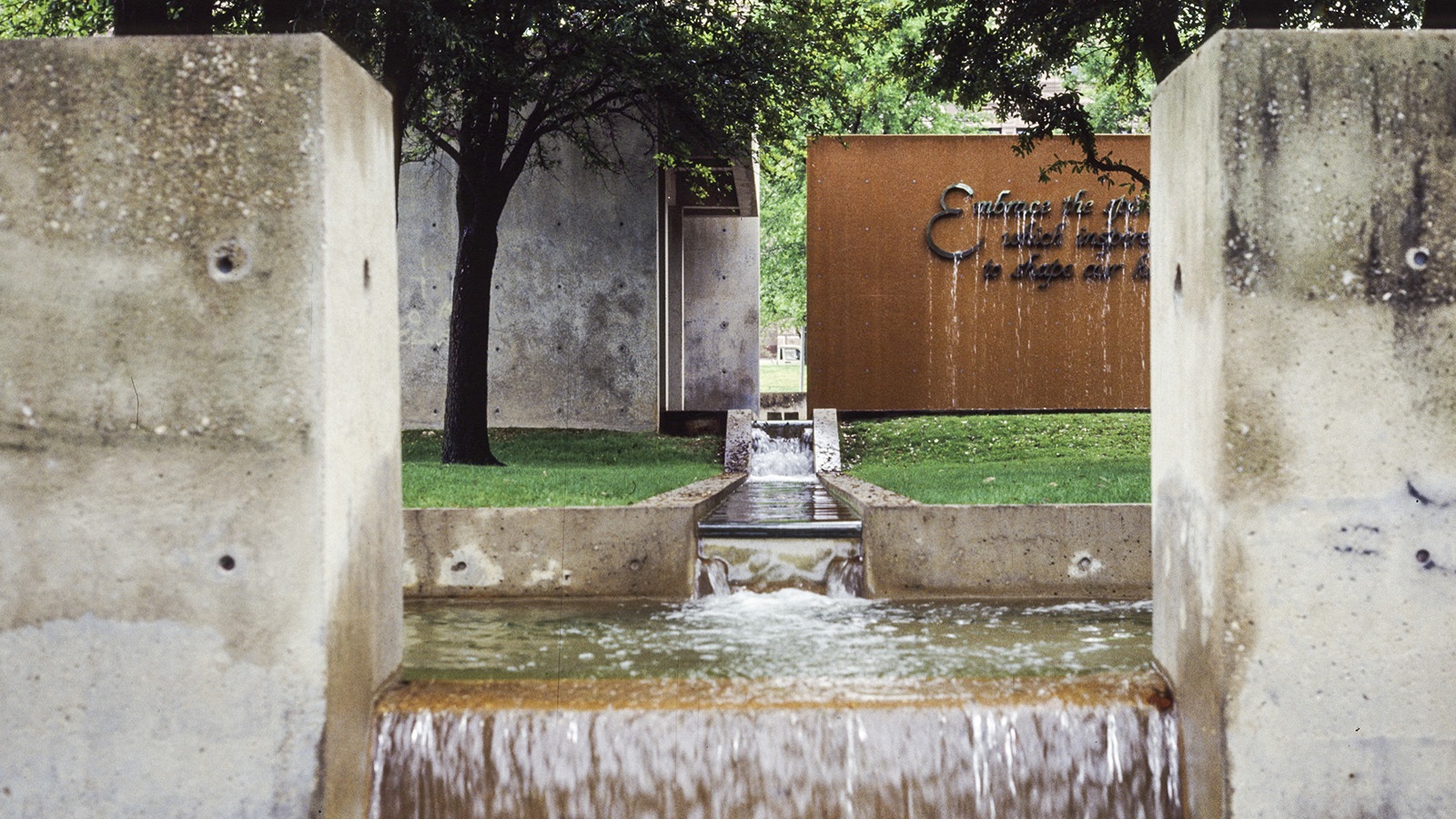
Photo: Water features, now dry due to the park’s closure, included waterfalls and water walls.
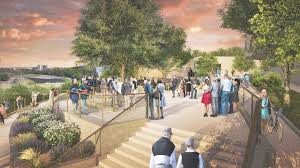
Rendering: The Canopy Walk would wind through the treetops, ending in a grand public space at the River Stairs near the banks of the Trinity River.
The text and media above are reproduced from the original source for purposes of government transparency and public information under fair use. All content remains the intellectual property of its respective authors and publishers. This reproduction does not imply endorsement by or affiliation with the original publisher. For the authoritative version, please refer to the original source.
Municue is in beta
Tell us what would make press release pages more useful for your workflow.