
Official City Release
Wild night at Kellis Park: Neighbors discover nighttime wildlife
Mentioned Entities
Source Text
Open source →
What’s that in the sky? A bird? A bat? A moth?
District 9 City Councilmember Elizabeth Beck recently hosted a Nature & Narratives event at Kellis Park. The event brought out 75 eager neighbors who spent the evening discovering the amazing nocturnal critters that live in our local parks.
City Park & Recreation staff teamed up with the Texas Parks & Wildlife Department (TPWD) and Texas Christian University (TCU). Together, they turned the dark park into a live science lab.
Shining a light on nighttime pollinators
The park came alive with glowing blacklight stations. Biologists used ultraviolet lights and large white sheets to attract nighttime bugs. This setup gave families a close-up look at local moths and insects. TPWD biologist Sam Kieschnick and his intern, Frankie Simmons, led the search and identified different species for the crowd. The evening was windy, so the blacklight stations were placed on the ground (as pictured above). They also explained how these insects pollinate our plants while the city sleeps.
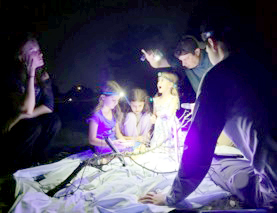
TPWD biologist Sam Kieschnick provided Petri dishes so the kids could easily look at the insects.
Listening to local bats
High above the crowd, bats swooped through the night sky. TCU professor Dr. Tory Bennett and her students set up a bat mistnet. This fine, soft net safely catches bats so trained scientists can study them. Students also used high-tech echolocation sonogram detectors — turning high-pitched bat calls into visual graphs — allowing them to identify exactly which bat species were flying overhead.

TCU biology students monitor the bat detector for bat “chirps.”
Why this matters
Events like this do more than teach the community. They help scientists track the health of urban ecosystems. By counting moths and monitoring bats, our city can better protect local green spaces.
A big thank-you goes out to our partners at TPWD and TCU. Their hard work keeps our parks wild, healthy and full of life!
Explore our iNaturalist 500 observations of 212 species.
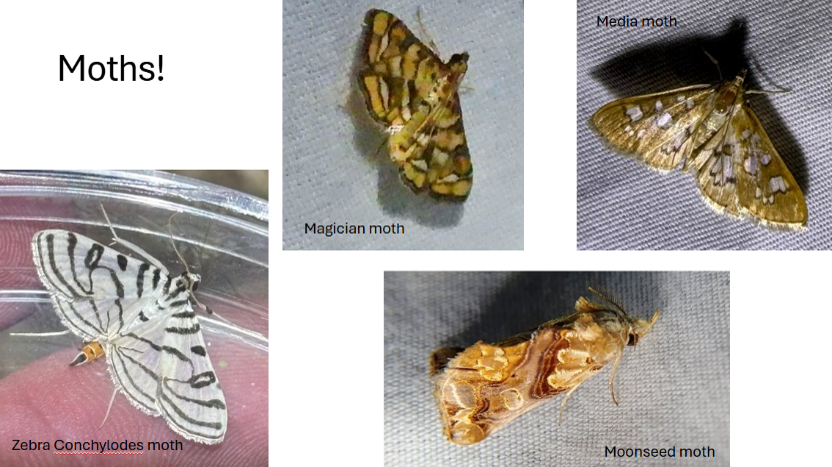
A diverse assortment of moths observed.
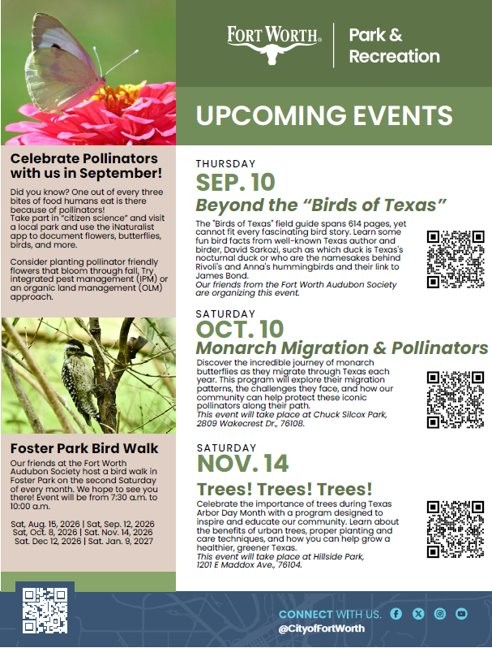
Check out upcoming Nature & Narratives programming!
Get articles like this in your inbox. Subscribe to City News.
The text and media above are reproduced from the original source for purposes of government transparency and public information under fair use. All content remains the intellectual property of its respective authors and publishers. This reproduction does not imply endorsement by or affiliation with the original publisher. For the authoritative version, please refer to the original source.
Municue is in beta
Tell us what would make press release pages more useful for your workflow.